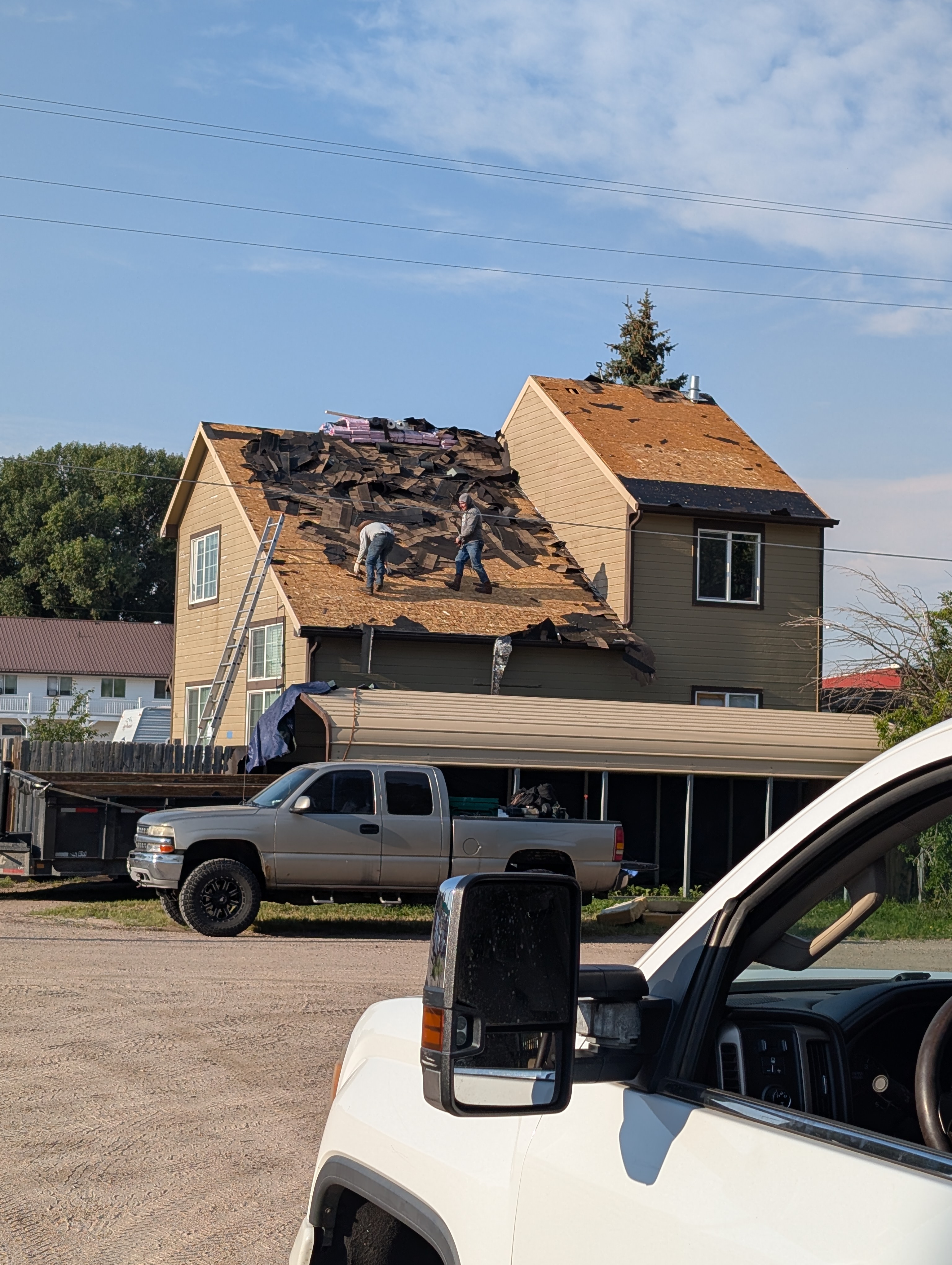
How Many Tons of Asphalt Shingles Does Your House Generate Over Its Lifetime?
May 6, 2026·3 min read
- asphalt
- sustainability
- permanent roofing
A typical Colorado home sends 24 tons of asphalt shingles to the landfill over its lifetime. That number assumes a 2,000 square foot roof, a 10-year replacement cycle, and a building that stands 100 years.
Tonnage per tear-off
A 2,000 square foot roof is about 20 squares of roofing. A typical asphalt shingle run lands near 240 pounds per square when you count bundle weight, starter strip waste, and cap cutoffs. Twenty squares at 240 pounds each is 4,800 pounds on the ground. That rounds to about 2.4 tons before you add felt underlayment, nails, aluminum drip edge strips, and failed valley metal. Add a second layer tear-off and the first truck gets heavier fast.
A full building life
Colorado houses on sound foundations routinely pass 100 years on the lot. Asphalt roofs on those walls rarely keep pace. In hail country a realistic replacement rhythm falls between eight and twelve years when you average storms, resale flips, and homeowner patience. Ten years is a fair midpoint for rough math. At least ten full tear-offs across a century at 2.4 tons each stack to 24 tons minimum from the shingle field alone on that footprint. Shorter cycles push the total higher. Steeper pitches add surface area. Larger homes scale the same way. None of that tonnage includes the dumpsters, pallets, or wrap that also ride to landfill.
Where Colorado sends the loads
Asphalt shingles can be recycled into road mix where the supply chain lines up. National studies still put real recycling rates under 10% of tear-offs. Most trucks dump at landfill. Colorado has limited shingle recycling capacity and long deadheads from mountain towns. Front Range jobs sometimes align with an outlet for a season, then the market moves and the same crew routes straight to dump. Unless your contractor confirms a recycler will take the load on your tear-off date, plan on landfill.
Labor still loads every pound by hand or conveyor. Tar-stained bundles tear skin and slow production. That cost sits in your bid whether you see a line item called “disposal” or not.
The fee nobody puts in the comparison chart
Disposal hits every replacement bid. Dumpster tonnage, haul time, landfill gate fees, and overweight charges show up as real dollars. On a typical house we see that disposal slice fall between $500 and $1,500 depending on squares, drive access, and local dump pricing. Run that across ten or more replacements over a 100-year life and you bought another small roof in gate fees alone while the cycle repeats.
Comparison shopping between two shingle bids without normalizing disposal assumes both crews quoted the same landfill path. Ask. A low toss number can hide a plan to stack illegal weight or a shorter roll-off cycle that leaves you ordering a second box mid-job.
Permanent roofing breaks the loop after the conversion tear-off. Storm claims can still drive a file, but you are not signing up for a guaranteed eight- to twelve-year landfill habit by default. Insurance dollars sometimes land on your desk after hail. That window can fund an upgrade from disposable shingles to something built for the altitude. The arithmetic on tonnage is still the same whether the check comes from your savings or underwriting.
For assemblies built to go the distance, page through products. When you want line numbers on your own roof, work it through the estimate wizard.
Get roofing straight talk in your inbox.
No spam. No sales pitch. Just useful information for Colorado homeowners.
Ready to talk about your roof?
Start the estimate wizard